Fixed dental braces
Modern orthodontics makes it possible to correct the position of the teeth and the bite, to achieve a healthier and more aesthetically pleasing smile. A fixed prosthesis is one of the most effective solutions for correcting the incorrect position of the teeth and improving the bite function. In this text, you will find out everything you need to know about the types of fixed prostheses, the method of placement, the duration of therapy, and maintenance. At the Sky Dental Concept office, orthodontic treatments are based on modern methods and an individual approach.
/ Learn More

Use the up and down arrow keys to resize the meta box pane.
Dental braces
What is a fixed denture and who is it for?
Sky Dental Concept, Belgrade, Serbia
fiksna proteza
A fixed prosthesis is an orthodontic appliance that is used to correct the incorrect position of the teeth and bite. It is placed directly on the teeth and is not removed during therapy, unlike mobile prostheses. It consists of braces, wires, and rubbers that work together on the teeth and gradually move them into the desired position.
This type of prosthesis is recommended for people of all ages - children, teenagers, and adults who want a more correct smile and better oral health. In teenagers, fixed prostheses are particularly effective because the bones are still developing, while in adults they give an aesthetically pleasing result and prevent further damage to the teeth.
how it works
The Process of Placing a Fixed Prosthesis
The installation of a fixed prosthesis in the Sky Dental Concept office includes several steps, from the first consultation to the start of orthodontic therapy.
-
1
Consultation and Planning
The first step involves a detailed examination and imaging of the jaw. Based on the results, the orthodontist creates an individual therapy plan. At this stage, all details are agreed upon, including the appearance and type of fixed prosthesis.
-
2
Before making and placing a fixed prosthesis
Before making and placing a fixed prosthesis, the patient receives all the necessary information about the procedure. If necessary, restoration of the teeth or gums is performed to ensure a stable and healthy foundation for the prosthesis.
-
3
Taking Impressions and Making Prostheses
The orthodontist takes impressions or a digital scan of the teeth to precisely plan the treatment. Based on the examination, photographs, and analysis of the bite, the type of fixed prosthesis and the plan for moving the teeth are determined.
-
4
Trial Setup
Before the final cementation, a trial setting of the prosthesis is performed to check fit, functionality, and aesthetic appearance. If necessary, small corrections are made to achieve the perfect result.
-
5
Placement of Permanent Fixed Prosthesis
After all corrections are completed, the prosthesis is permanently placed. The patient receives maintenance instructions and regular check-ups to ensure the long-term durability and comfort of the new smile.
Post-installation pains and adjustments
After the placement of fixed braces, it is common for patients to experience mild discomfort or pain for a few days. This is a sign that the teeth are starting to move and that the therapy is working. Discomfort can be alleviated with analgesics, eating soft foods, and avoiding hard bites for the first few days. The adjustment period usually lasts 7–10 days, after which the patient gets completely used to the device. During that period, sensitivity of the teeth or mild irritation of the mucous membrane may occur, which is easily solved by using protective waxes.
Is fixed dentures the right choice for you?
If you have an irregular position of your teeth, an irregular bite, or want a perfect smile, fixed dentures are one of the most reliable solutions. At the Sky Dental office, orthodontists approach each patient individually, analyze the condition of the jaw, and recommend the best option according to age and the goal of therapy. A consultation with an expert is the first step towards a healthier smile. Only an orthodontist can assess which type of appliance, material, and treatment plan gives the fastest and most lasting results.
Fixed prosthesis - Types and Possibilities
There are several types of fixed prostheses on the market, and the choice depends on the aesthetic and functional needs of the patient.
-
01/
Fixed metal braces
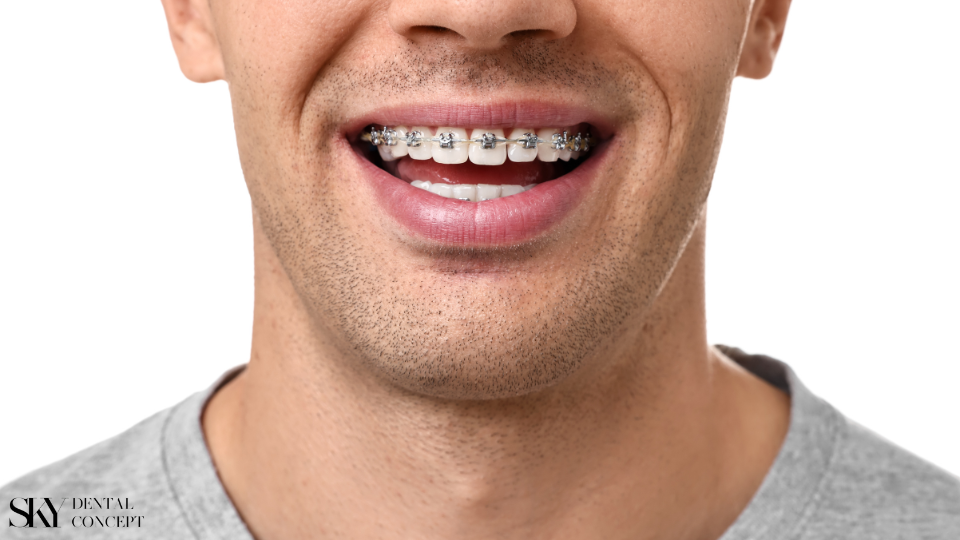
A metal fixed prosthesis is the most common type of fixed prosthesis. It is made of stainless steel and is a traditional solution. Its main advantage is durability and affordability, while its disadvantage is visibility when smiling.
-
02/
Aesthetic fixed prosthesis (ceramic or white fixed prosthesis)
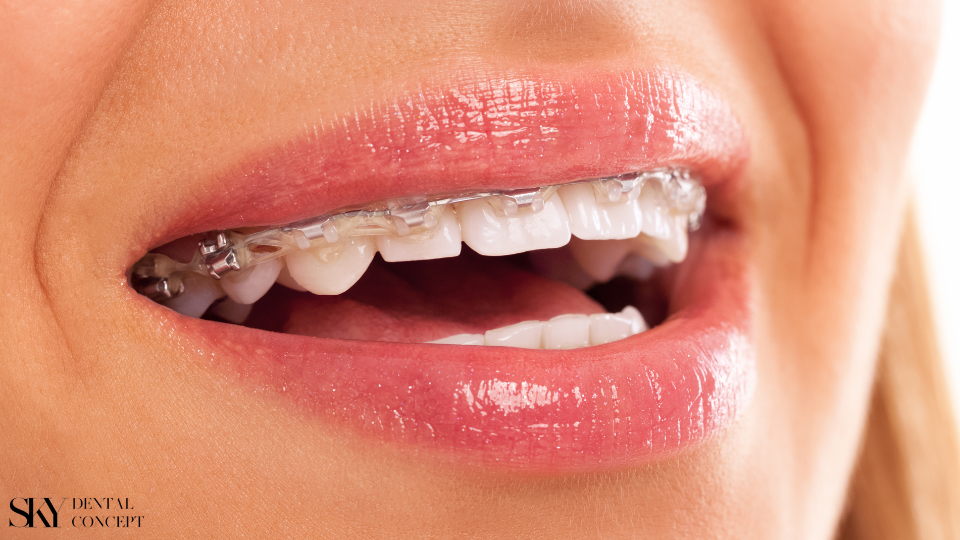
An aesthetic fixed prosthesis is made of tooth-colored material. Aesthetic prostheses are functionally equal to metal prostheses, but require more careful maintenance.
-
03/
Sapphire braces
A sapphire prosthesis is a transparent version of a fixed prosthesis, made of sapphire crystals, which is why it is more discreet on the teeth.
-
04/
Lingual braces
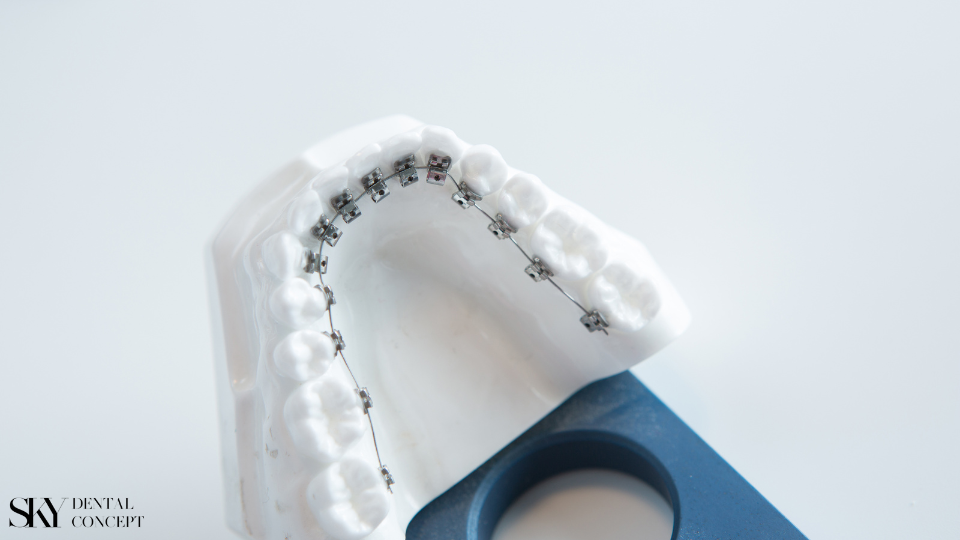
A lingual prosthesis is placed on the inside of the tooth, which is why it is almost invisible from the outside. This technique requires an experienced orthodontist and a long period of getting used to it, but it is aesthetically perfect.
Rubber bands for fixed prostheses - aesthetics and function
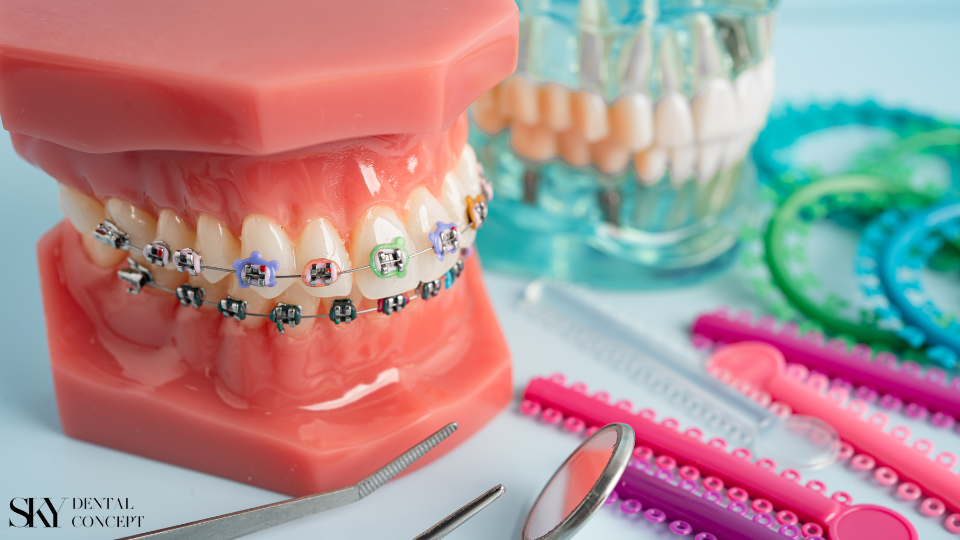
Rubber bands for fixed prostheses have a double function - they connect brackets and wires, thus transferring pressure to the teeth, but also contribute to the aesthetics of the smile. They are available in different colors, so patients can choose the ones they like best. Bright colors such as blue, pink, and green are popular among children and teenagers, while adults usually choose transparent or gray tones. There are also bite rubbers, which are placed between the jaws and help correct an improper bite. Regular replacement of rubber bands is important for the therapy to be effective and comfortable. If you want a more discreet look during therapy, elastic bands in neutral colors can be used, such as transparent, white, or gray shades.
How long does it take to wear a fixed prosthesis?
When asked how long a fixed prosthesis is worn, the answer depends on the complexity of the orthodontic case and the cooperation of the patient. On average, the therapy lasts from 12 to 24 months, although with more severe irregularities it can take longer. The length of therapy is influenced by factors such as:
-
01/
age of the patient (results are achieved faster in younger patients)
-
02/
severity of the irregularity
-
03/
regular controls and maintenance of hygiene
-
04/
following the orthodontist's instructions
Maintenance of fixed prosthesis and hygiene
Proper hygiene while wearing a fixed prosthesis is crucial for the success of the therapy. Because of braces and wires, food remains are more easily retained, so it is important to use special brushes, interdental brushes, and dental floss. The use of alcohol-free mouthwash is also recommended. As for diet, patients should avoid sticky, hard, and too sweet foods - they can damage the brackets and increase the risk of tooth decay. That is why it is important to adjust your diet, choose softer foods, and carefully clean your teeth after each meal while wearing fixed dentures.
Price of Fixed Braces
The price of a fixed prosthesis depends on the material and type of appliance and ranges from around 400 to 900 euros per jaw.